



Winter and vitamin D (NSW)
By Dr David Deam
Published June 2023
As the weather gets colder and the amount of sunlight decreases as we head into winter, it is a
good time to consider if vitamin D testing may be helpful in selected patients.
Vitamin D levels fluctuate significantly depending on the season, especially in the
southern states of Australia. At the end of winter, approximately 36% of Australians are vitamin D
deficient, in comparison to 14% at the end of summer.
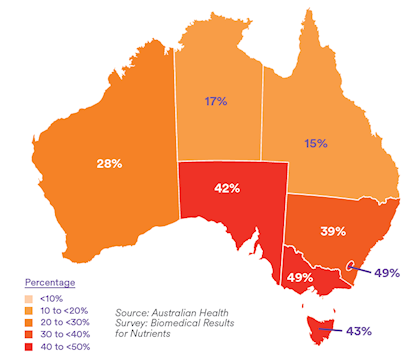
Diagram 1 below indicates the
percentage of Australians with vitamin D deficiency in winter.
Diagram 1 - Vitamin D deficiency in winter by state (2011-2012)
Target vitamin D levels
The international recommendations for adequate vitamin D levels vary, but based on a review of
current literature and
recently published recommendations 1, 2 experts suggest that
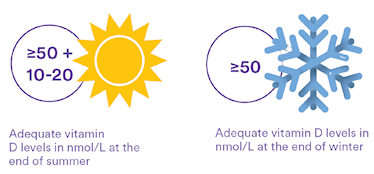
adequate vitamin D status is a serum level equal to or
greater than 50 nmol/L at the end of
winter. This level should be 10-20 nmol/L higher at the end of summer to allow for seasonal
decrease.
Who to test
Vitamin D testing should be ordered for patients at risk of vitamin D deficiency.
This
includes:
- Housebound people - including the sick and disabled
- Elderly in high care situations
- People with darker skin
- People who cover their skin due to religious or cultural reasons
- People who regularly avoid the sun
- People who work indoors
Also, patients with:
- Signs, symptoms, and/or planned treatment of osteoporosis or osteomalacia
- Increased alkaline phosphatase with otherwise normal LFTs
- Hyperparathyroidism, hypo- or hypercalcemia, or hypophosphatemia
- Malabsorption (i.e. CF, IBD, coeliac, etc.)
- Medications known to decrease vitamin D levels (i.e. anticonvulsants)
- Patients with chronic renal failure and transplant recipients
Associated tests
When ordering a vitamin D test for a patient, also consider ordering a serum calcium and parathyroid hormone (PTH) test, which will assist in placing the vitamin D level within the context of overall calcium homeostasis. If Osteoporosis is present, fasting blood crosslaps (CTX) will provide a way of monitoring bone turnover in response to therapy.
References
- Nowson, C. A., et al. (2012). Vitamin D and health in adults in Australia and New Zealand: A position statement. MJA 196(11), 686-7.
- The Royal College of Pathologists of Australasia (2013). RCPA position statement: Use and interpretation of Vitamin D testing.
About the Author

Dr David Deam
MBBS MAACB FRCPA- endocrine function testing
- laboratory automation
- protein abnormalities
Dr Deam graduated with Honours in Medicine from Monash University in 1978 and obtained his FRCPA in 1985 following postgraduate training in Biochemistry at the Royal Melbourne Hospital. After several posts in Chemical Pathology at the Royal Melbourne Hospital and the Royal Women’s Hospital, he was appointed Head of Chemical Pathology at the Royal Melbourne in 1996. He joined Gribbles Pathology (now Australian Clinical Labs) in 1998.
Dr Deam has played an active role in teaching scientific, nursing and medical staff at both undergraduate and postgraduate levels and has been an examiner for the Australasian Association of Clinical Biochemists as well as the Royal College of Pathologists of Australasia.
Dr Deam’s research interests and publications include work on thyroid function testing, various aspects of diagnostic protein measurement and the rational use of biochemical tests. His special interests include testing of endocrine function; protein abnormalities; as well as laboratory automation and application of computing to pathology services.
Local Pathologists
 Pathologist
